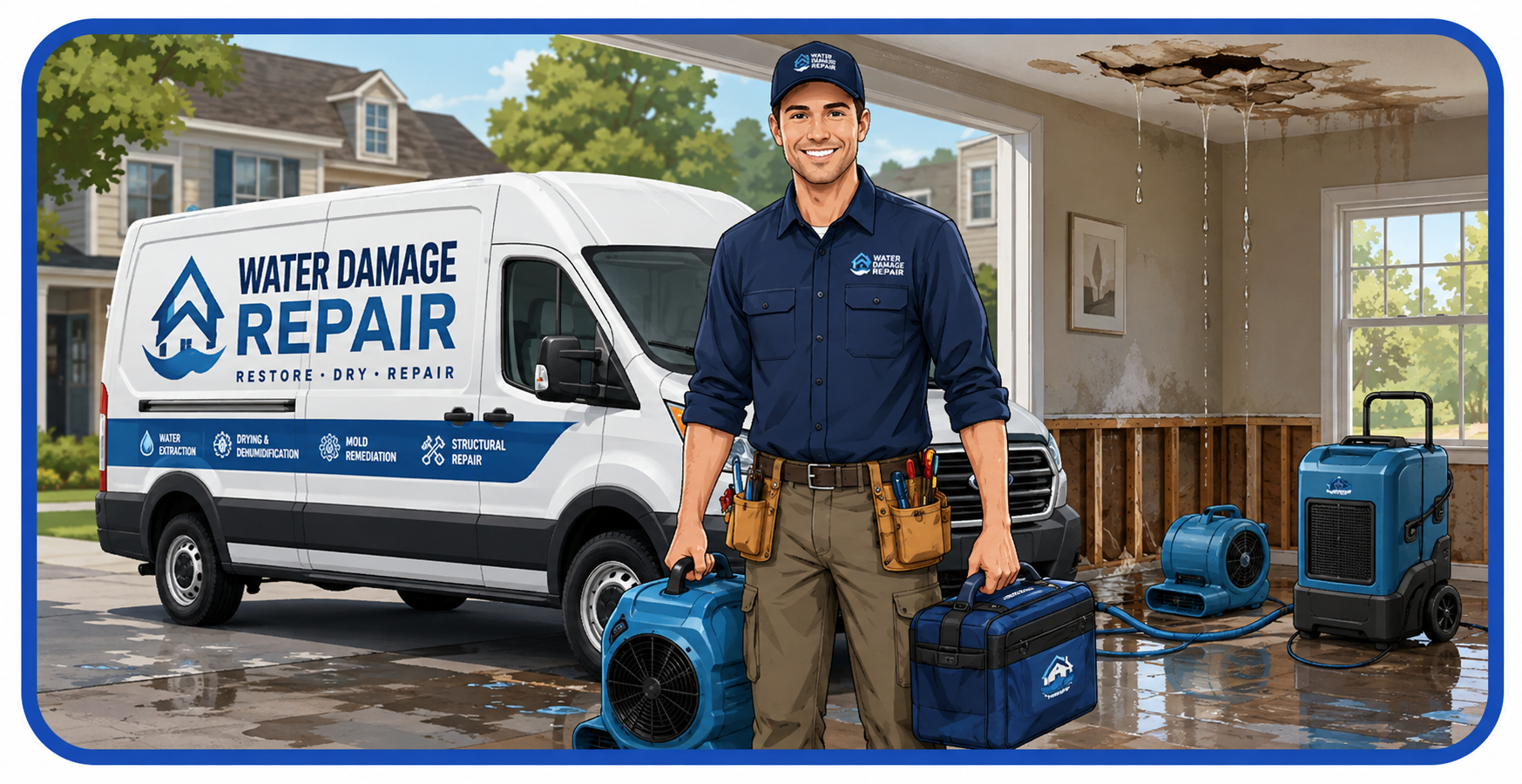
Containment & Negative Air
The affected area is sealed off with 6-mil poly and a zipper door, and a negative air machine keeps spores from drifting into clean rooms.
- HVAC registers sealed in the work zone
- HEPA air scrubbers running throughout
Maybe it is a stale smell in the basement, spots that return every few weeks, or an inspection report that found growth in the attic. Call Water Heater Repairer and we route you to a licensed and insured independent mold remediation contractor near Calhoun City who fixes the moisture problem along with the growth.

Water-related mold has to be contained and dried out before anyone starts cleaning, and the right contractor knows that order.
We route mold calls to independent contractors who carry their own licensing and insurance and whose work follows the IICRC S520 standard.
If a sale is closing or a lease turnover is coming, we look for a nearby remediator who can walk the job soon instead of weeks out.
The scope lists the square footage of affected material, the containment layout and the cleaning method before any wall is opened.
Expect 6-mil poly sheeting with zipper doors, negative air machines exhausting outside, HEPA air scrubbers and HEPA vacuums.
We are a referral line, not a remediation company. What we do is listen to what you are seeing and smelling, ask about recent leaks or floods, and send a pro who handles water-related mold every week. Many contractors in the network are IICRC-trained, so ask for credentials and proof of insurance on the first visit.
Real remediation means physically removing the growth and drying the building, not coating over it.
The affected area is sealed off with 6-mil poly and a zipper door, and a negative air machine keeps spores from drifting into clean rooms.
Growth on drywall and insulation means it comes out, bagged in the containment and removed sealed, since porous material cannot be reliably cleaned.
Framing and roof sheathing are kept and cleaned by sanding, soda blasting or dry-ice blasting, then HEPA-vacuumed.
One of the most common finds is a bathroom fan venting straight into the attic, soaking the sheathing every winter until it turns black.
Stains along the base of a wall or swollen baseboard often point to a past leak, which a meter reading and a small inspection hole can confirm.
Once wood has been cleaned and dried, an encapsulant can be applied as a final layer, but it goes on after cleaning and never in place of it.
Tell us where you see or smell it, whether there was a leak or flood, and whether you have an inspection deadline, and we line up a local remediator.
The contractor arrives for a walkthrough with a moisture meter, thermal camera and flashlight to trace both the growth and the water feeding it.
The written quote lays out removal, containment, cleaning method, and the repair needed to stop the water source.
Containment comes down only after an independent assessor, separate from the remediation contractor, performs clearance testing.
Without moisture, mold cannot grow, which is why cleaning it up while the leak continues just resets the clock. Typical sources include a dripping trap under the vanity, bad window flashing, a bare-dirt crawlspace, or a bath fan exhausting into the attic.
The scope should spell out what is causing the moisture and whether that repair is included or needs another trade. When the cause is a plumbing or roofing problem, that trade often has to finish before remediation begins.


A little growth on bathroom caulk or grout is normally just housekeeping, not a remediation job. The calls that need a pro look different. Watch for a stale odor every time the basement door opens, discoloration that grows out from under trim, or drywall that gives when you push on it.
Spots that return on a top-floor ceiling, paint bubbling on an exterior wall, and damp closet walls in cold weather all suggest hidden moisture. Once affected areas grow beyond roughly ten square feet, or the growth followed water damage, containment and a trained contractor are the usual call. Mold found during a sale also needs paperwork the buyer side will accept.
A remediation pro can trace the moisture and find what is hiding behind the wall.
Our sale was two weeks out when the inspector flagged dark staining across the attic decking. The contractor traced it to a bath fan that had never been ducted outside, set up containment, soda-blasted the sheathing and rerouted the fan. The independent clearance report is what saved the sale.
Three rounds of bleach on the wall behind our toilet and the spot kept coming back. The contractor took the trim off, found a weeping supply line, and the drywall behind was wet clear through. Once the leak was fixed and the wall was cut out, it never came back.
The lower level always smelled stale and my son's allergies were acting up whenever he slept down there. The contractor used a thermal camera and found an old leak that had soaked the bottom of a wall behind the couch. With containment, negative air and scrubbers running, the cleanup stayed in that room and the odor cleared.
Bleach may lighten the stain on the surface, but it does not remove growth inside drywall or wood, and paint just hides it. Without fixing the moisture and physically removing the affected material, it usually comes back.
Mold spores exist naturally everywhere, so no one can remove all mold from a house. Remediation is the process of sealing off, removing growth, cleaning and drying so levels return to what is normal for a healthy home.
Removing colonized drywall releases spores into the air, and sealing the area keeps them out of the rest of the house. A negative air unit keeps pressure lower inside the zone and vents outdoors, so air flows in rather than out.
It should be an independent assessor who is not tied to the company that did the remediation. That avoids a conflict of interest and gives buyers, lenders and insurers a report they are more likely to accept.
Mold can aggravate allergies and asthma in some people, but we cannot diagnose health issues. If anyone in the home has symptoms, talk with a doctor and tell the contractor so the work zone is sealed with that in mind.
Usually not, as long as it is remediated correctly and documented well. What buyers generally look for is the cause repaired, a written scope of work, and an independent clearance report in hand before closing.
We route mold remediation calls throughout Calhoun City, from older homes with damp crawlspaces to newer builds with attic venting problems. Zip codes served include 38916 plus nearby zip codes.
Attics, bathrooms, crawlspaces and finished basements in older and newer homes alike.
Independent remediators also serve suburbs and outlying towns around Calhoun City.
Home sellers, landlords and property managers dealing with an inspection report are welcome to call.

Call Water Heater Repairer any time for Mold Remediation in Calhoun City, MS.